Home / Wastewater Treatment Solutions
Wastewater Products & Services
Circular Wastewater Solutions
Modular Technology for Compliant Wastewater
With increasingly strict regulatory standards in play, the reuse of wastewater is being considered in everything from municipal networks to complex industrial processes. Our modular solutions are designed to make compliance simpler for water companies, utilities and industrial organisations.
Our high-performance systems combine mechanical, biological and chemical processes with advanced automation. Being modular, solutions are flexible, scalable and tailored to each site. They can be used to upgrade existing assets or deliver new treatment capacity.
We’re helping our customers go further as the industry evolves, boosting performance, resilience and sustainability, and protecting public health.
Membrane Bioreactor and Moving Bed Biofilm Reactors
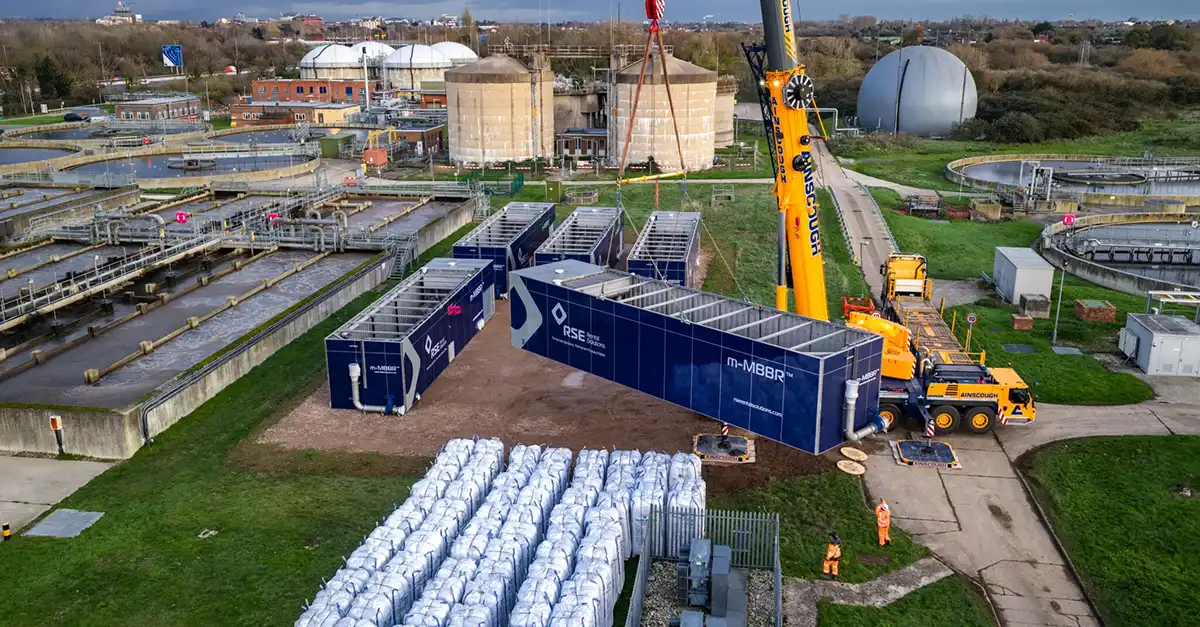
Our m-MBR® and m-MBBR® products are high-efficiency modular water treatment plants. They can be scaled and integrated to suit each project’s needs, providing a flexible platform for combining other treatment processes and supporting greater circularity of water resources.

m-MBBR®
Modular Moving Bed Biofilm Reactor
m-MBR®
Modular Membrane Bioreactor
RSE Rental Solutions

A More Sustainable Water Future
Wastewater is increasingly viewed as a recoverable resource. Globally, we’re shifting from a traditional ‘take-use-discharge’ model towards a circular water economy, which is accelerating investment in advanced treatment trains. These treatment trains can convert municipal and industrial wastewater into high-quality water suitable for agriculture, industry, and even drinking water.
Case Studies

FAQ’s
How does the modular approach support project delivery and future capacity requirements?
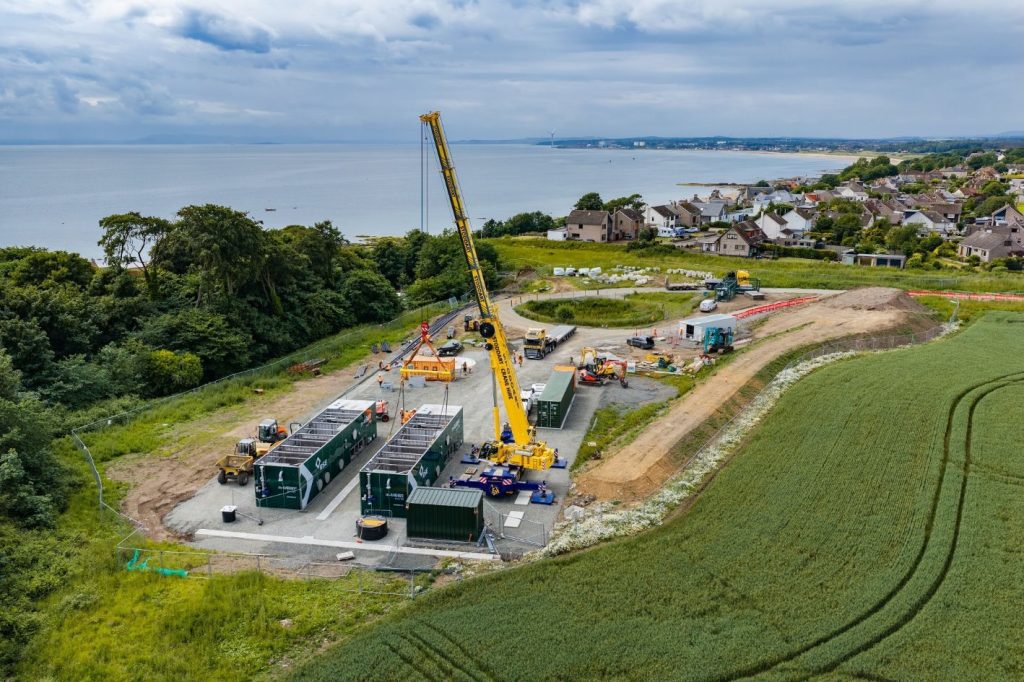
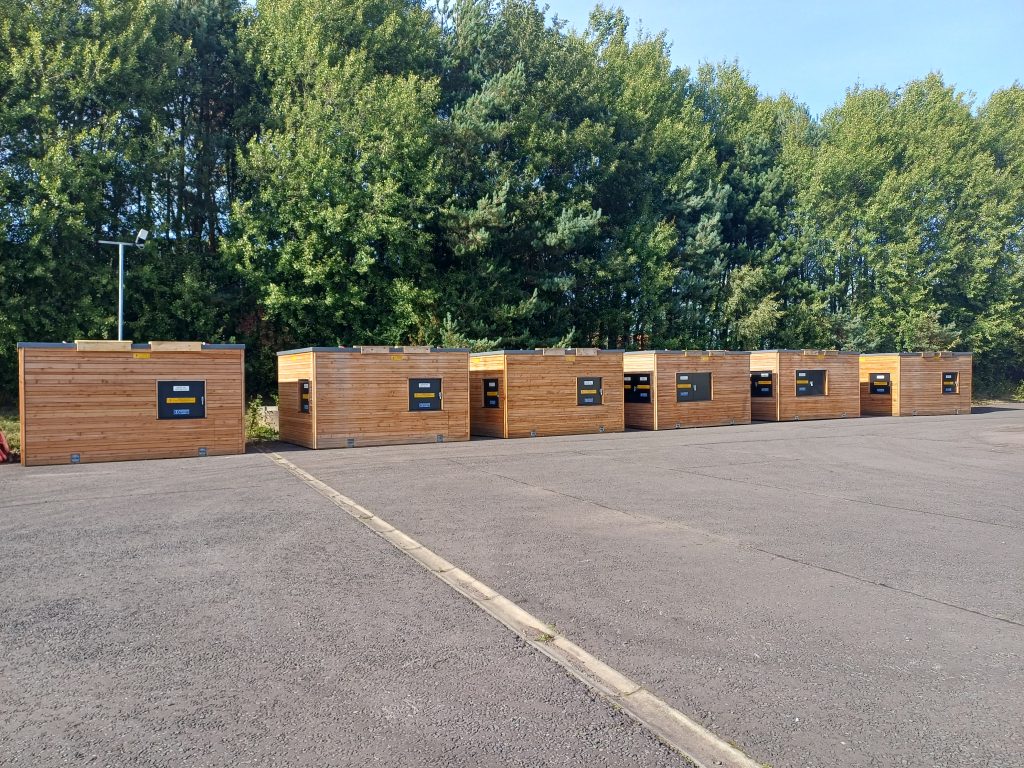
RSE’s modular approach enables systems to be factory-built and tested before being transported to site, supporting rapid installation and deployment. Standard m-MBBR® and m-MBR® systems are designed for conventional road transportation and can be brought fully operational quickly, making them suitable for both permanent and temporary applications.
The modular platform also provides scope for future capacity expansion. During front-end engagement, RSE assesses process data and provides early technical information covering footprint, power demand, scalability and operational parameters. This enables engineering teams to assess integration requirements and develop a solution that can accommodate future treatment needs.
What treatment configurations are available for the m-MBBR®?
The m-MBBR® can be configured to address different treatment objectives. For BODreduction, the standard module uses a three-stage biological reactor with integrated two-phase solids separation. For BOD and total nitrogen reduction, the first stage operates asan anoxic zone for denitrification, while the second and third stages provide BOD removal,nitrification and additional ammonia reduction. Alternative configurations are available for BOD and ammonium (NH₄) reduction, while thesystem can also be deployed as a tertiary nitrification stage where existing treatment worksare failing to meet ammonia discharge consents. This can operate as a standalone facilityor be integrated into existing works as a side-stream reactor.
What flow rates and treatment capacities can the m-MBBR® accommodate?
The modular approach allows treatment capacity to be matched to project requirements and scaled as demand changes. The technology can treat wastewater flows exceeding 150,000 m³/day, with applications capable of reducing flows to as little as 25 m³/day.
Three standard m-MBBR® module sizes are available, with maximum capacities ranging from approximately 3.5 l/s to 10.5 l/s per module. Multiple modules and configurations can be used to provide the required overall treatment capacity.
How can the m-MBBR® integrate with existing wastewater treatment assets?
The m-MBBR® is designed to provide a flexible platform that can be integrated with existing treatment processes or deployed as part of a new treatment train. Its modular construction allows additional treatment capacity to be introduced without necessarily requiring a conventional site-built plant.
For example, the technology can be used as a tertiary nitrification stage to address ammonia compliance issues, or as a side-stream reactor within existing works. Its compact footprint and scalable design can also support upgrades where available space or existing infrastructure is constrained.
What are the key design considerations when specifying an m-MBR®?
The m-MBR® is designed for applications where consistently high-quality effluent, a compact footprint and scalable treatment capacity are required. The system combines aerobic biological treatment with submerged membrane filtration, eliminating the requirement for secondary clarification or tertiary filtration.
Key considerations include the required treatment capacity, available footprint, feed characteristics, integration with existing processes and the required effluent quality. The system can provide treatment rates from 5 to 900 litres per second and can be installed within an existing tank or a prefabricated tank.
What are the benefits of an m-MBR® compared to conventional wastewater treatment?
MBR systems deliver consistently high effluent quality, provide a significantly smaller footprint than conventional activated sludge systems, and perform well under varying influent conditions. They can also support water reuse initiatives and help maximise treatment capacity on constrained sites.
Can an m-MBR® be used to upgrade an existing treatment works?
Yes. MBR technology is frequently used to increase treatment capacity, improve effluent quality or bring existing assets into regulatory compliance. RSE’s modular m-MBR® can be incorporated into existing infrastructure or installed within prefabricated treatment systems.
Why choose an m-MBR® for a site with limited space?
Because membrane separation replaces large clarification processes, m-MBR® systems can achieve high treatment performance within a compact footprint. This makes them ideal for urban locations, remote communities, industrial facilities, campuses and resort developments where space is limited.
Enquire Now
Speak to Our Team
Learn more about our business, products or services by completing the form, or alternatively fill in our public feedback form here.