What is GAC? (Granular Activated Carbon)
Granular activated carbon (GAC) filtration passes water through a bed of activated carbon to remove dissolved organic compounds, taste and odour-causing substances, colour, pesticides, PFAS, trace contaminants and disinfection by-products.
GAC is widely used in drinking water, industrial and water reuse applications, either as a standalone treatment process or in combination with other technologies. The granular activated carbon improves water quality and aesthetics, helping organisations meet increasingly stringent water quality standards.

FAQs
Why is GAC Commonly Used in Drinking Water Treatment?
GAC is proven, tolerant of variable feed water, and addresses several risks at once: pesticides, organics, taste, odour, and disinfection by-product precursors. It also acts as a safety barrier against unexpected catchment contamination, which is why many works retain GAC as a final polishing stage.
What is Empty Bed Contact Time (EBCT)?
Empty bed contact time (EBCT) is the time water would take to pass through the carbon volume if no carbon were there: bed volume divided by flow. It is the key design parameter. Taste and odour duties use 5 to 10 minutes, pesticides 10 to 20 minutes, and PFAS typically 15 minutes or more.
Can Ceramic Membranes be Retrofitted Into Existing Treatment Works?
Yes. RSE regularly installs ceramic plant alongside or in place of existing filtration, reusing the intake, coagulation, contact tanks and clean water storage where they remain fit for purpose. Because our modular units arrive fully tested, disruption to the operating works is kept to a minimum.
What Capacity Ranges are Available?
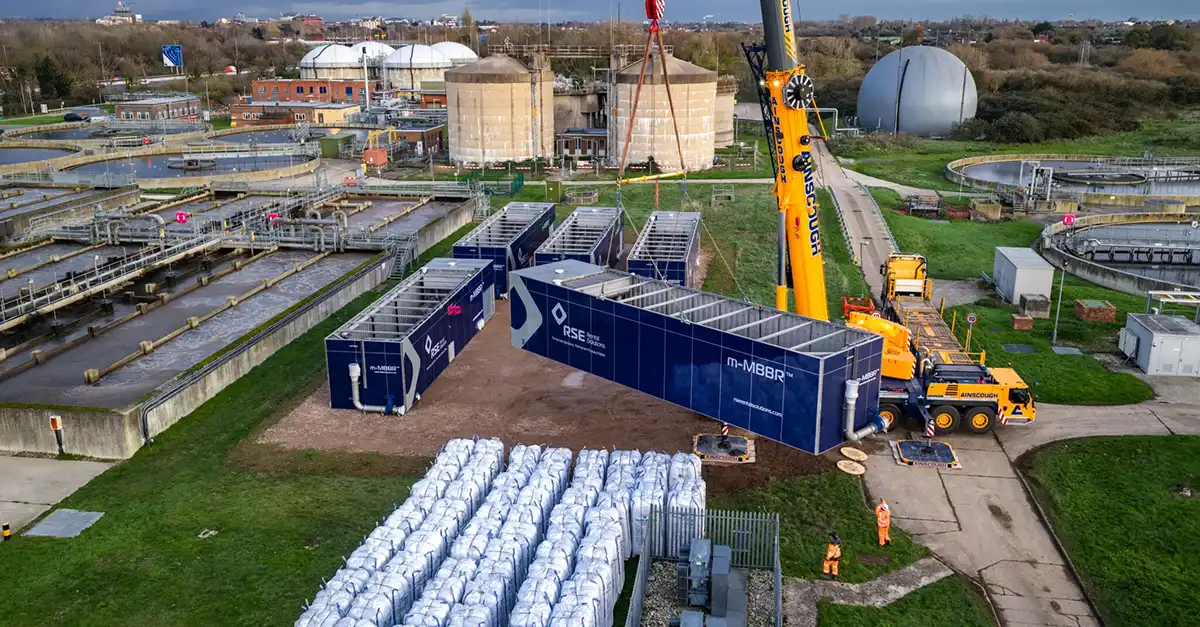
RSE delivers modular GAC from small rural supplies of a fraction of a megalitre a day, up to major works handling tens of megalitres a day. Larger duties use multiple vessels in parallel allowing one vessel to be taken offline for changeout without losing output.
Can Carbon be Regenerated?
Yes. Spent carbon goes to a thermal reactivation facility, which burns off the adsorbed organics and returns the carbon to service, typically with a loss of 5% to 10% each cycle. Reactivation costs less than virgin carbon and cuts embodied carbon. PFAS-loaded carbon needs a facility licensed to destroy those compounds.
How Quickly Can RSE Deliver a Modular GAC Plant?
Standard modular GAC units are typically delivered in 6 to 12 months from order, and repeat builds faster. Because the vessels, pipework, valves and controls are assembled and tested off- site, installation and commissioning normally take a few weeks.
Enquire Now
Speak to Our Team
Learn more about our business, products or services by completing the form, or alternatively fill in our public feedback form here.